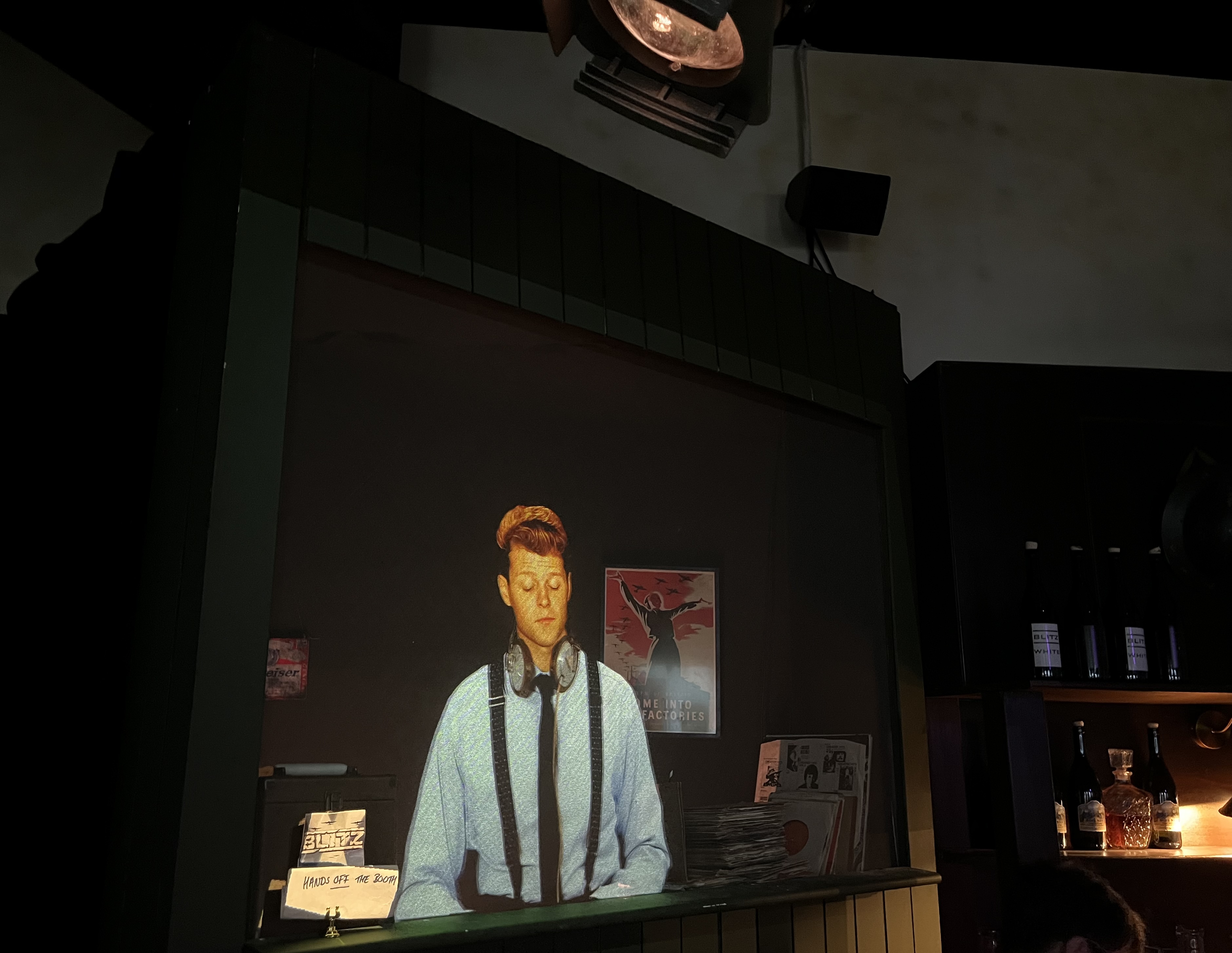
Shock, Rusty and R.E.R.B.
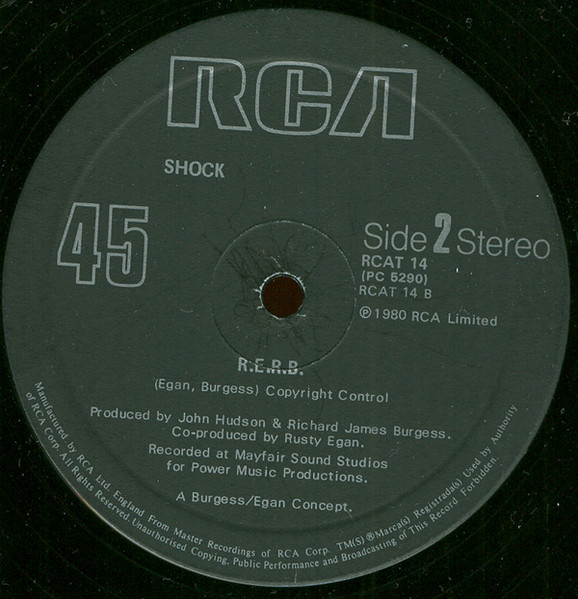
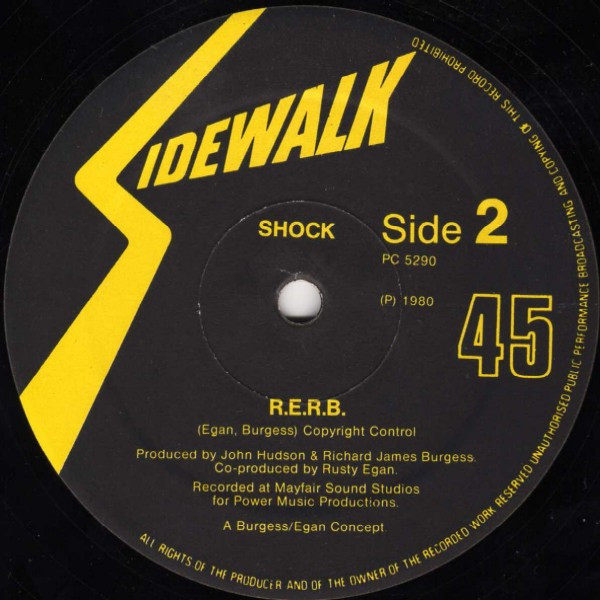
RL: Richard, you turn up as arranger and contributor of ‘Effects’ on Shock’s ‘Angel Face’ single (Shock 1980) as well as co-producer and co-writer of ‘R.E.R.B’, the B-side, with Rusty Egan.
RJB: The credits are all messed up on that single. The truth is that Rusty and I produced the record and John Hudson engineered it. I programmed or played every note on all those Shock tracks and Rusty was integrally involved in the way those records sound and how they came about.…
Shock blew my mind every time I saw them live. That was another element to the London scene at that time – the theatrical/dance/hedonistic performance art. R.E.R.B. was a last-minute, hurried production for a B-side to Angel Face. … We had no idea it would turn into a club classic when we were cutting it. Shock should have been much bigger than they were, and Rusty and I should have received the credit for producing the records. …
JLW: Shock actually toured the UK performing a routine in which they mimed to ‘Einstein a Go-Go’, and thereby did us a huge favour, because lots of kids got to hear that track. A couple of people I met who heard them assumed Shock and Landscape were the same group …
How did you end up being such a part of the New Romantic scene, even if that was sometimes behind the scenes? I know you worked with Spandau Ballet on ‘To Cut a Long Story Short’ (1980) and their Journeys to Glory album (1981). …
RJB: It came about because of the Blitz and my longstanding friendship with DJ Rusty Egan. I became good friends with several people at the Blitz from being there every week. Mostly I had no idea what any of them did outside of the club and then one night Spandau Ballet got up and played and I realized I had been talking to them for months at the bar. Gary Kemp had asked to hear what I was working on, and I took him out to my car and played him a cassette tape of the rough mixes for the Tea-rooms album. A short while later, I got a call from Steve Dagger asking if I would be interested in producing their first album.
…
By that time, I had seen almost every show they had played … and I had an extremely clear vision of what the record should sound like. I knew it needed to be quintessentially Blitz sounding but they weren’t an electronic group per se. I made notes about the sounds I wanted, and it was all sonically constructed in my head before we recorded the album. I didn’t want to overproduce the record and looking back, I stuck really close to my original vision for the sound and functionality of that early phase of the band. It very quickly established them as a new musical movement and influenced many records by other artists to follow. …
Extract from ‘PUNK JAZZ? An interview with John L. Walters and Richard James Burgess of Landscape’ by Rupert Loydell, Punk & Post-Punk – Volume 14, Issue 1, 2025, published by Intellect Books.